Deal
Step-by-step instructions
Choose a decision time
Agree when you will decide whether to continue, move or postpone. Review a reliable local forecast as the date approaches rather than relying on a long-range prediction. Tell helpers how the decision will be communicated. Keep the rain plan in the listing so shoppers know where to check.
Identify what shelter can and cannot do
A garage may protect suitable goods from light rain if access stays safe and private storage is secured. A canopy needs correct anchoring and manufacturer guidance; it does not make severe weather safe. The US National Weather Service advises moving to proper shelter when thunder threatens outdoor activity. Do not shelter shoppers under a tree or treat an open-sided canopy as lightning protection.
Protect vulnerable goods early
Keep electronics, books and textiles away from damp ground. Store packing materials in a dry container. If rain starts, stop testing electrical goods and move people before merchandise when conditions become unsafe. Do not run extension leads across wet paths. Avoid a rushed move that creates unstable stacks or blocks the garage exit.
Update the existing listing
Change the dates or status through My Listings and explain the new arrangement clearly. Use the same details in social posts and messages to helpers. Do not leave an old sign pointing to a cancelled sale. If a platform preserves an outdated preview, write the correction plainly in the post itself.
Reduce confusion at the property
Remove permitted temporary signs when cancelling. If safe and appropriate, display a brief cancellation notice without sharing private information. Do not ask shoppers to wait through dangerous conditions. A postponed event is a new commitment: verify helpers and merchandise before publishing replacement hours.
Review costs before rescheduling
Some supplies can be reused; others may need replacement. Update your budget and inventory if goods were damaged. Decide whether a smaller event, another venue or another sales channel better fits your situation. Do not include wet or damaged goods without reassessing safety and accurately describing condition.
Prepare a practical weather plan
Check the local forecast as the sale approaches and again before setup. Decide which goods need shade, dry storage or extra protection. Keep covers and containers ready, and protect electronics and delicate materials from moisture.
Use shelters according to manufacturer instructions. A canopy is not safe shelter in severe weather; follow local warnings. Keep electrical equipment dry and avoid creating trip hazards with covers or cords.
Decide whether to postpone
Ask whether shoppers and helpers can move safely and whether goods can remain protected. If not, postpone or close. Set a decision time before people are likely to travel, while accepting that conditions can change suddenly.
Plan how to move goods indoors without opening private areas to visitors. In hot conditions, arrange shade, water and breaks.
Update the listing first
Use your listing's management controls to update dates, hours or description, or end the sale if it will not take place. If its current state does not permit the date change, use the available end or repost flow and check the resulting public details.
Keep date fields and the description consistent. A note saying 'postponed' is not enough if the listing still advertises the old time. Open the public listing to check what shoppers see.
Update posts, signs and collection arrangements
Update: our garage sale planned for [original date] is [postponed / closing early] because of [brief reason]. [New date and hours, if confirmed]. Check the latest details before travelling: [DealDrive listing link].
Replace placeholders and share only confirmed information. Edit original social posts where possible, notify people with collection arrangements, and correct or remove signs safely. Do the same when the location changes or major advertised goods are no longer available.
Use a concrete communication checklist
Keep the listing, social posts, community notices and sign locations in one short list. When conditions change, decide the revised status first: cancelled, postponed with no new date, or moved to a confirmed date and time. Update the main listing, then copy a clear message to the other channels you control. For example: 'Today's sale is postponed because of the weather. Please do not travel to the property. The current schedule will be posted at this listing link.' Do not leave 'today' as the only date reference in a message people may read later. Notify helpers and arrange sign removal when it is safe. If buyers have already arranged collection of paid goods, contact them privately through the agreed method and confirm a safe alternative.
Protect stock and people as separate tasks
Move vulnerable goods out of moisture early, before you have to rush through a crowded display. Keep electrical equipment dry, secure loose packaging and avoid slippery coverings across paths. Separately, decide where people will go during unsafe conditions. A garage doorway, tent or tree is not a universal safe shelter option; follow local weather-authority guidance, including lightning advice. Do not keep the event open simply because the merchandise is under cover. After conditions improve, inspect surfaces and supports before restarting, and confirm whether the revised hours still work for your helpers. If reopening would create rushed or confusing arrangements, close the event and communicate a new plan instead.
A real-world example
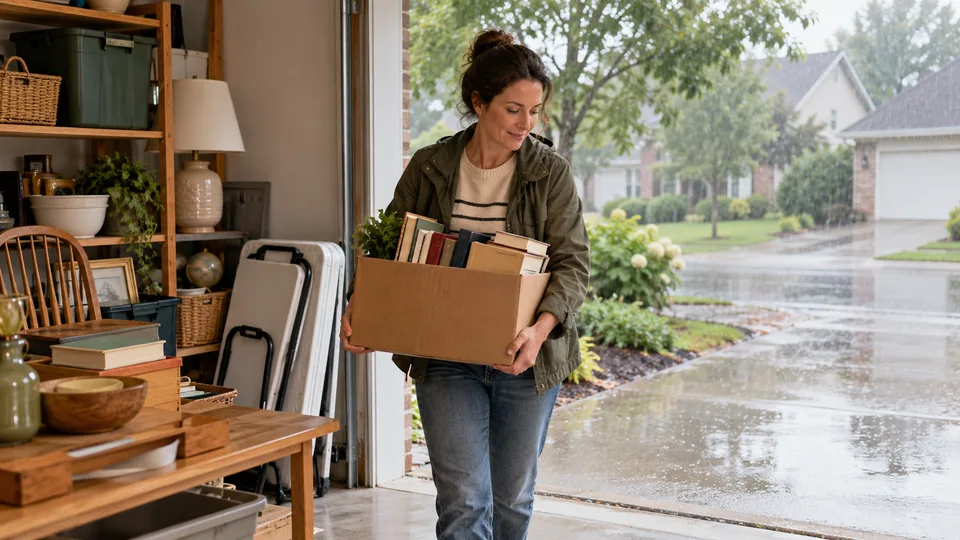
At the agreed decision time, a severe-weather forecast makes an outdoor sale unsuitable. The seller postpones, updates the DealDrive listing and each community post, tells helpers and removes roadside signs. The new date is published only after the venue and helpers are confirmed.
Common mistakes
- Treating a tent as protection from lightning.
- Changing one advertisement but leaving others active.
- Blocking exits with hastily moved merchandise.
Practical checklist
Frequently asked questions
Should I cancel for light rain?
Consider surfaces, shelter, equipment and local forecasts. There is no universal rain threshold; safety and usable access come first.
What should I do when I hear thunder?
Stop the outdoor activity and move to appropriate shelter. Follow official local weather guidance.
Can I move everything into the garage?
Only if it provides safe, usable space without obstructing access or exposing private areas.
Should I create a new listing for a changed date?
Start by updating the existing listing where the application allows it so shoppers have one current source of information.
Weather safety reference
National Weather Service lightning safety. Follow your local weather authority’s warnings.