Deal
Step-by-step instructions
Define success before choosing a date
Write down your main goal: clear a room, earn money from useful belongings, or join a neighborhood event. Choose one primary goal so you can resolve tradeoffs. A household trying to reclaim a garage should not spend three weekends researching every paperback. A seller with a few valuable pieces may be better served by specialist listings. Count the goods you can realistically clean, test and label; do not advertise an enormous sale simply because you have many unsorted boxes.
Choose a venue and check its constraints
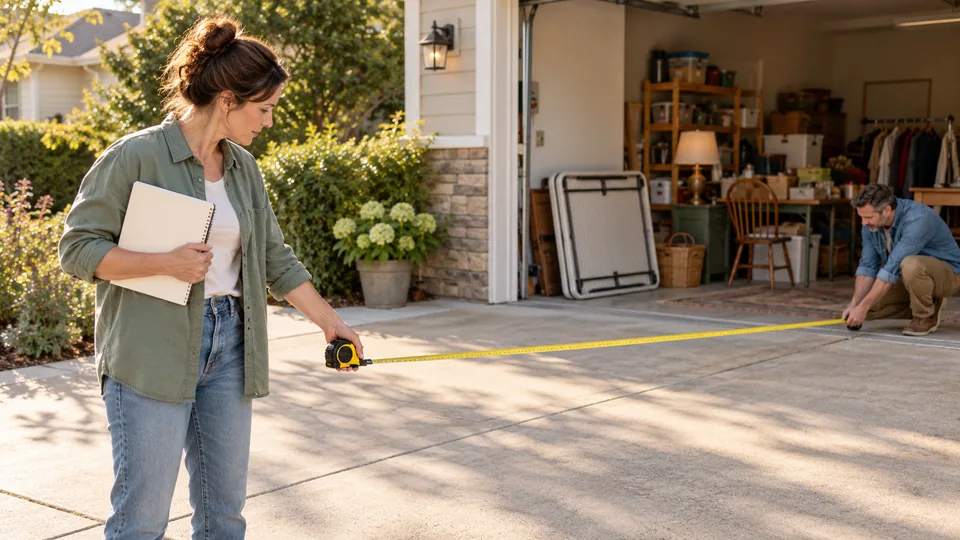
Measure the usable space after allowing for entrances, emergency access and a checkout queue. A garage provides some shelter but can expose tools and private possessions. A driveway makes loading easier but needs a plan for parking and moving vehicles. A yard needs firm, stable surfaces. A community event can share promotion but requires agreed responsibilities. Ask your municipality about permits, sale-frequency limits and signs, and check landlord or association rules. Requirements differ across US and Canadian jurisdictions; an app listing is not a permit.
Select hours around shoppers and helpers
Review nearby advertised sales and ask neighbors when they usually shop. A Saturday morning may fit your area, but shift work, religious observances, seasonal heat and community events can change demand. Choose hours you can staff, including setup and cleanup. For example, an advertised 8 a.m.–noon sale might require helpers from 7 a.m. until 1 p.m. Publish each day's hours separately. A short, well-prepared event is easier to manage than extending hours without enough merchandise or help.
Make a modest budget
List permit costs if applicable, supplies, equipment rental, advertising and disposal costs. Borrow stable tables and use existing bags where suitable. Separate the opening cash float from expenses: it is money you already own, not a cost or sale revenue. Estimate how many goods might sell at your likely average price, then subtract expenses using the earnings calculator. Test a low-sales scenario before spending. Neither foot traffic nor revenue is guaranteed.
Work backward and make a fallback decision
Use the timeline tool to assign tasks fourteen, seven, three and one day before the event. Give each task an owner and a small deadline. Check forecasts again close to the sale and decide what conditions mean moving, postponing or cancelling. Tell helpers how you will announce a change. If moving indoors would block safe access or expose private rooms, postponement may be more practical. Update your existing listing rather than creating conflicting copies.
Coordinate households in writing
For shared sales, agree who supplies tables, where each household's goods go, how prices are identified and how proceeds are divided. Give each seller a short code on tags and record that code at checkout. Decide whether one cashier collects all payments or each household runs its own table. Set boundaries on discounts: a helper should not negotiate another household's minimum without permission. Confirm permission before publishing anyone else's address.
Choose a date and a realistic scope
Check your calendar, local events and seasonal weather. Weekends may suit local shoppers, but there is no universally best day. Choose a date when you can be present for setup, selling and cleanup.
Walk through your home and estimate how many goods you can prepare. A smaller sale of clean, labelled items is easier to manage than a driveway full of unsorted boxes. Leave time to research unfamiliar items.
Set opening hours you can keep
Allow setup time before opening and packing time after closing. A four-hour morning sale, for example, may be easier to staff than an all-day event; choose hours that fit your area and household.
Publish consistent dates and hours on your listing, posts and signs. If you do not want early arrivals, say so politely. For a multi-day sale, write each day's actual opening hours in the description so shoppers do not assume overnight access.
Household or neighbourhood sale?
A single-household sale is simpler to coordinate. A neighbourhood sale can offer shoppers several nearby stops, but needs agreement on dates, hours, promotion and cleanup.
- Confirm participants and get permission before publishing another household's address.
- Let each household manage its own payments where practical.
- At a shared site, label items by seller and agree how proceeds will be recorded.
- Recruit a helper to cover breaks and busy periods.
Check local requirements
Check your municipality's current permit requirements, limits on sale frequency or duration, and restrictions on signs. Check property-owner, rental and neighbourhood rules where applicable. Requirements vary; your local authority is the right source.
Plan access and parking without blocking pavements, neighbours' driveways or emergency routes. Do not assume a public verge or utility pole is available for signs.
Your preparation timeline
- One to two weeks before: confirm dates and rules, recruit help, sort items, research prices and prepare your listing and promotion.
- The day before: finish labels, check the forecast, arrange tables, charge devices and pack a payment kit.
- Sale morning: set out goods, check paths and signs, brief your helper and open on time.
Leave spare time in each stage. If you cannot prepare safely, choose a later date rather than rushing.
Turn the plan into a small working budget
Separate items you can borrow from items you must buy, and check whether borrowing creates transport or return costs. Write a low, middle and high scenario using the same number of prepared goods but different sell-through assumptions. For example, forty sales at an illustrative $5 average produce $200 gross; twenty sales produce $100. If your cash costs are $35, the respective net estimates are $165 and $65. Neither includes a wage for your preparation time. Add that time separately if comparing the event with other ways to sell. Set a spending limit before buying signs or renting equipment. When the main goal is clearing space, a lower net may still be acceptable, but it should be a conscious choice rather than a surprise.
A real-world example
A household with 80 prepared items estimates that half may sell for an average of $5. That scenario gives $200 gross. With $35 in supplies, estimated net proceeds are $165. If only 25 items sell at that price, net is $90. These are planning examples in your chosen currency, not predicted earnings.
Common mistakes
- Buying equipment before estimating demand and costs.
- Publishing hours without allowing time for setup and cleanup.
- Assuming a neighbor's permit or signage rules apply to your property.
Practical checklist
Frequently asked questions
Do I need a permit?
Check your city or town's official website or contact its licensing office. Rules can depend on location, frequency, signs and the type of event.
How far ahead should I plan?
Two weeks is a useful working schedule for a prepared household; allow longer for a large clearance, permits or multiple families.
Should I hold a two-day sale?
Only if you have stock, staffing and a reason for shoppers to return. Advertise separate hours and reassess whether the second day justifies the effort.
What if the forecast changes?
Use your agreed fallback plan and update the existing listing, social posts and helpers promptly. Remove misleading signs.