Deal

Step-by-step instructions
Assign clear roles
Decide who welcomes visitors, answers merchandise questions, handles payment and watches valuable goods. Even a small sale benefits from one person knowing who covers checkout during a break. Share the pricing plan and private minimums with authorized helpers only. Tell everyone where bags, change and the inventory sheet are kept.
Open on time with a calm walkthrough
Before opening, secure private rooms, check stable tables and remove tripping hazards. Set out permitted signs and confirm that vehicles can park without blocking access. Count and record the opening float privately. Check phone charge and connectivity if you accept digital payments. Do not invite shoppers into unfinished setup.
Help without hovering
A simple 'Good morning, let me know if you need measurements' gives visitors space. Offer assistance with bulky goods and explain defects before a sale. If several people want help, acknowledge them and handle one transaction at a time. Keep offers and paid goods separate so you do not double-sell an item.
Use a consistent checkout routine
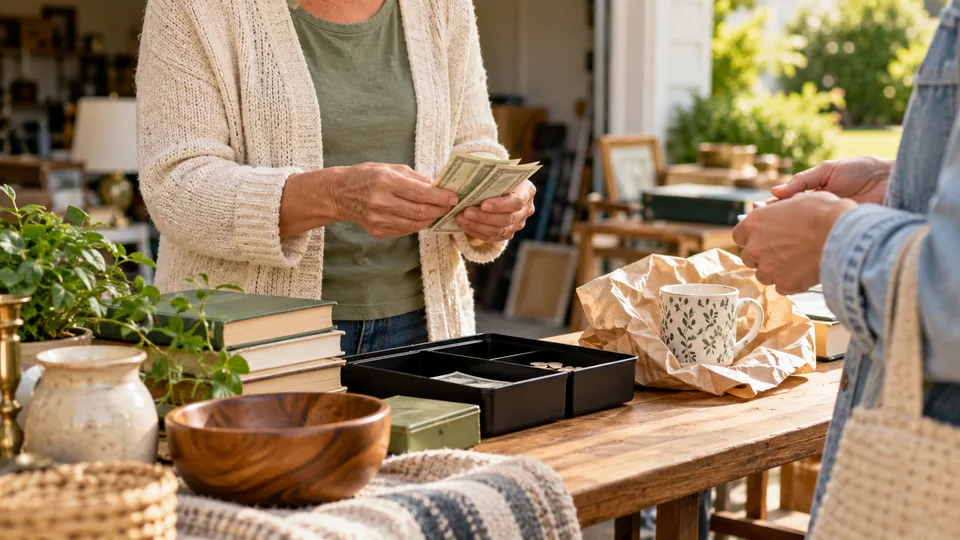
Identify the items, agree the price, total bundles and verify payment before releasing goods. Count cash carefully and give the correct change. Confirm digital payments in your own account rather than trusting a buyer's screenshot. Record the final price and mark the item sold. Keep the opening float separate from revenue calculations.
Handle friction calmly
For an early arrival, say 'We open at nine; please return then.' For an offer below your minimum, explain that you cannot accept it and suggest a different item if useful. If a dispute arises, pause the transaction and clarify what was agreed. Do not escalate confrontation to protect a small sale; prioritize personal safety and seek appropriate help when needed.
Review the event while it runs
Rearrange depleted tables, remove packing from paths and monitor weather. At your planned review time, apply clear reductions to selected goods. Tell helpers about every change. Stop entry at the published closing time, finish agreed transactions and remove public signs promptly. Update the listing so buyers do not travel to a closed event.
Pack your payment and packing kit
Keep a modest amount of change in denominations suited to your prices. Record starting cash separately so you can distinguish it from takings. Keep money under your control, not in an unattended box.
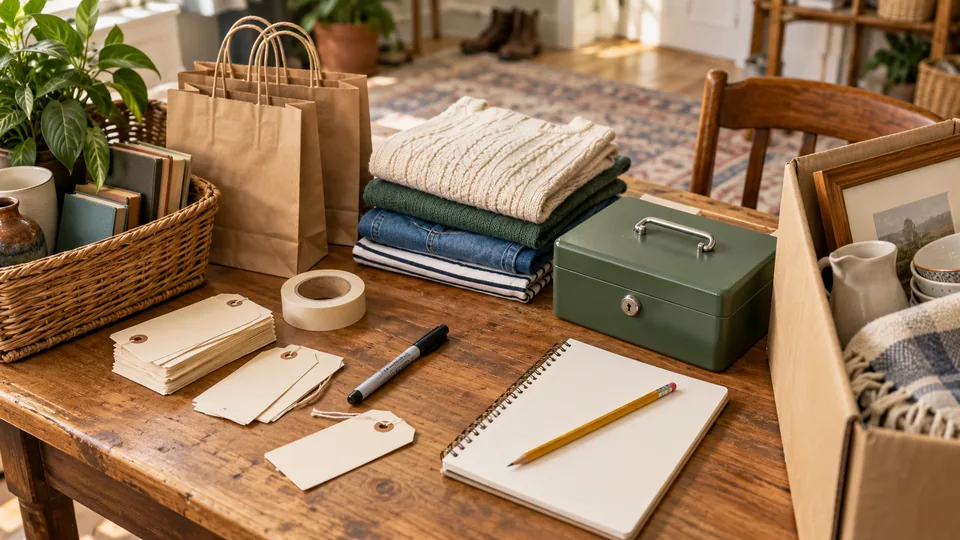
Charge your phone and payment devices, test connectivity and prepare a power bank if needed. Display accepted payment methods. Have bags, clean packing material, tape, labels, pens and a notebook ready. Reuse packaging only when it protects goods safely.
Brief your helper
Ask another trusted person to help with busy periods and collections. Agree who answers questions, takes payments and watches valuable goods. Share prices and discount limits so shoppers get consistent answers.
Plan breaks. Keep children and pets safely away from traffic, lifting and payment areas. Do not leave one person to supervise the sale while also carrying furniture.
Welcome shoppers and agree clear totals
A simple 'Hello—let me know if you need dimensions or have a question' is enough. Let people browse without pressure. Be honest about testing, damage and missing parts.
When negotiating, state the agreed total clearly. Keep paid goods separate from unpaid goods. Confirm exactly which items a bundle includes before packing.
Manage a queue and large collections
Ask people to wait while you complete each payment. Check electronic payments in your own account before handing over goods. Pause to resolve uncertainty rather than rushing because others are waiting.
For furniture, agree a collection time, suitable transport, lifting help and any hold arrangement before payment. Mark the item sold and record the arrangement privately using only the contact information needed.
Before-opening checklist
- Prices and walking space checked.
- Change counted and payment devices charged.
- Bags and packing supplies ready.
- Helper knows roles, prices and private-area boundaries.
- Weather plan and listing checked.
- Valuables supervised and home entrances secure.
In quiet moments, tidy displays. Near closing, review your discount plan and update major changes in availability.
Run a checkout rehearsal
Before opening, practice one cash purchase and one digital-payment verification with the helpers who will actually take money. For cash, state the total, acknowledge the amount received, calculate change and finish the transaction before starting another. Keep the received note identifiable until the change is agreed so a denomination dispute is easier to resolve. For digital payments, check the receiving account using your own trusted device and the provider's process. A customer showing a confirmation on their phone does not replace that check. Record the final price, item or bundle and any owner code. Keep private payment information out of the inventory notes. If connectivity fails, use the payment methods you can verify or pause the sale rather than handing over goods on an unconfirmed promise.
Manage competing requests without abandoning the sale
A shopper may want a furniture-loading demonstration while another wants a discount and a third is waiting to pay. Acknowledge each request, then finish the active transaction. Ask the display helper to answer simple product questions or bring the owner to the table. Schedule loading when someone can supervise the public area and checkout. Give clear instructions: 'I can discuss the desk after this customer finishes paying.' Do not let a buyer's haste make you leave cash unattended or open private rooms. Take brief breaks through a helper handoff, including the current cash and held-item status. If you are alone, plan a shorter event and simpler selection so the sale remains manageable.
A real-world example
A buyer holds two $6 items and asks for both for $10 while another shopper waits. The cashier confirms the bundle fits the pricing plan, says the total aloud, verifies payment and marks both items sold. A helper wraps them while the cashier greets the next person.
Common mistakes
- Leaving cash unattended during a busy period.
- Treating pending digital payment as received.
- Changing discounts without telling helpers.
Practical checklist
Frequently asked questions
How much change should I prepare?
Estimate from your price points and likely cash payments. Use smaller denominations and coins that fit your prices; there is no universal correct amount.
Can customers hold goods?
Set a clear policy and deadline. Do not mark an item paid or sold unless the transaction meets your agreed terms.
What if a buyer is rude?
Keep the response brief, decline the transaction if necessary and prioritize safety rather than winning an argument.
Should I let shoppers enter early?
Follow your published policy consistently and do not allow browsing while setup is unsafe.
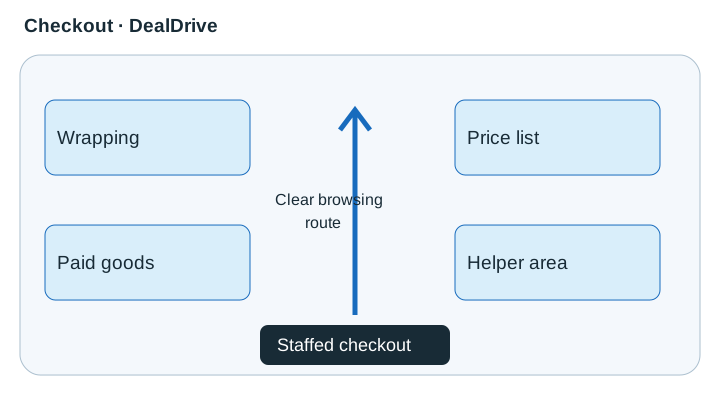
Set up a clear checkout station
 View diagram at full size (opens an enlarged view) ↗