Deal
Step-by-step instructions
Inspect the piece
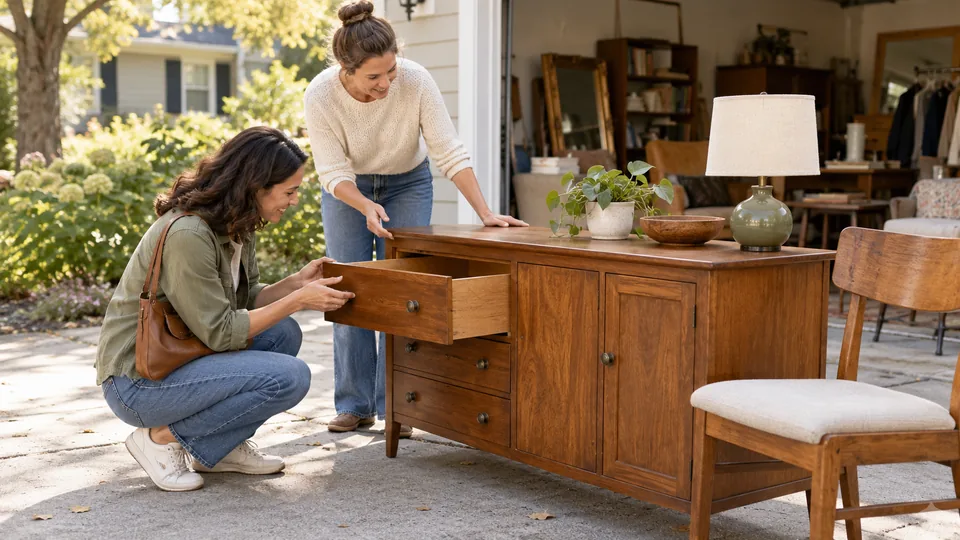
Check stability, joints, surfaces and obvious damage. Review relevant recalls and manufacturer guidance. Do not offer unsafe furniture as a bargain.
Measure for buyers
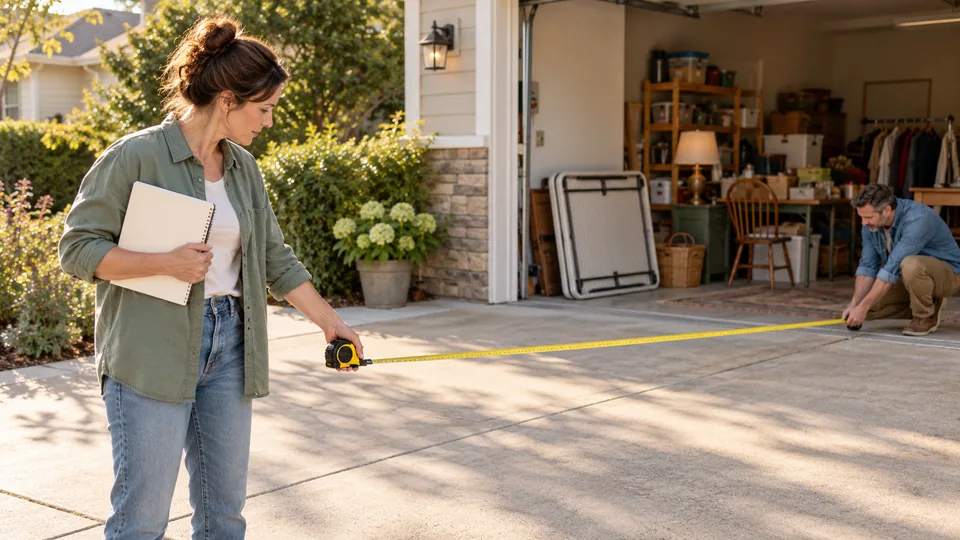
Record width, depth and height and any removable parts. Explain loading needs without promising delivery or assistance you cannot provide.
Compare equivalent goods
Match material, maker, condition and style. Completed local sales are useful evidence; a high asking price alone is not a valuation. Set aside potentially valuable antiques for research.
Agree pickup terms
Show defects and dimensions in photos and labels. Confirm transport, helpers and pickup time before payment. Mark paid items clearly and keep vehicles away from browsing customers.
Identify, measure and inspect the piece
Write down width, depth and height, including protruding handles or legs. Measure removable parts separately if that helps a buyer judge transport. Inspect joints, drawers, hinges, upholstery, undersides and visible damage. Disclose loose parts, stains, odors, repairs or missing hardware without claiming you can establish a safety history you do not know. Check the exact brand and model against applicable recall information, particularly for children's furniture and other safety-sensitive products. Do not treat a warning label or missing restraint as a cosmetic detail. Put potentially unsuitable merchandise aside until its status is resolved. A clean, accurate description reduces wasted collection trips and gives buyers a reasonable basis for deciding whether the piece fits their needs.
Research a practical local asking price
Compare similar secondhand furniture by material, size, brand and condition. Distinguish solid wood from veneer where you can verify it and avoid unsupported labels such as 'antique' or 'designer.' Look at completed transactions when available, not only ambitious unsold asking prices. Transportation matters: a bulky piece with difficult access may attract fewer local buyers even if it was expensive new. Decide on an asking price and a private minimum before opening. An illustrative $60 asking price with a $45 minimum can give room for negotiation, but those numbers are not market guidance for a particular piece. Separate pricing strategy from urgency; if the space must be clear that afternoon, establish a realistic backup destination.
Prepare photographs and a collection plan
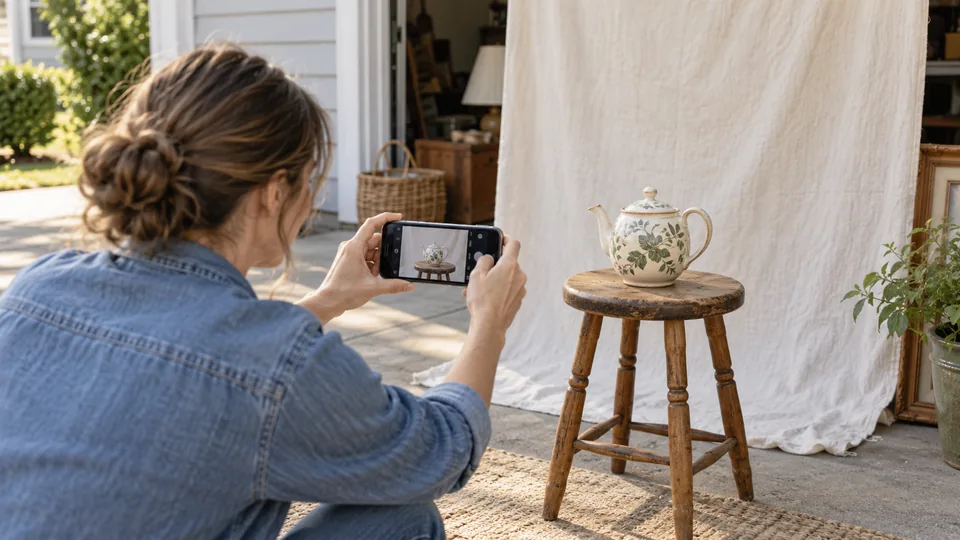
Photograph the whole item in even light, then show useful details and defects. Avoid wide-angle distortion that makes the piece appear larger or hides its shape. Include dimensions in the description, not only in an image that may be hard to read. Keep the access route clear and decide which parts can safely be removed. Put hardware in a labelled bag attached securely to the relevant item. Buyers should bring suitable transport and enough capable help. Do not promise loading assistance you cannot safely provide, and never leave the cash station unattended to carry furniture. If collection will happen later, agree on the item, amount paid, deadline and what happens if collection is missed before accepting payment.
Handle holds and payment without confusion
Make your hold policy clear and apply it consistently. You might hold an item for a short agreed time while the buyer arranges transport, or sell on a first-completed-purchase basis. Avoid taking conflicting deposits from different people. Record a sold item immediately and mark it clearly so another helper does not negotiate it again. Verify the full payment in your own account before handing over the item; a screenshot, email or promise of an overpayment refund is not proof. Keep contact information for an agreed pickup private and only as long as needed. If a buyer reports a problem, discuss the facts and your stated terms calmly, while recognizing that local consumer obligations vary and a handwritten 'as is' note does not settle every legal question.
A real-world example
A bookcase listing includes dimensions and a close-up of a chipped corner. The buyer confirms suitable transport and a pickup window before paying.
Common mistakes
- Omitting dimensions or collection constraints.
- Promising delivery or loading help you cannot provide.
- Taking conflicting holds on the same piece.
Practical checklist
Frequently asked questions
Should I deliver furniture?
Only if you deliberately offer it and can do so safely under clear terms. Do not promise it just to close a sale.
Can I refinish it first?
Research uncertain or antique pieces before irreversible work. Cleaning and restoration can affect value and condition.
Should I accept a deposit for later collection?
Only after agreeing clearly on the item, amount, collection deadline and what happens if collection fails. Rules and obligations vary locally. Avoid taking payment on vague promises or making conflicting holds.
What measurements should I advertise?
Give width, depth and height, plus useful removable-part dimensions and collection access limits. A photograph alone does not tell a buyer whether the piece fits their vehicle or doorway.