Deal
Step-by-step instructions
Check supports
Inspect legs, locks and surfaces before loading. Use stable ground and respect load limits. A cloth must not hide damage or substitute for a safe surface.
Create a clear browsing edge
Face labels outward. Keep fragile pieces back from edges and heavy goods low and stable. Avoid stacks that require moving several objects to inspect one.
Group by shopping decision
Organize books by topic, toys by type and clothing by size. A table-wide price must apply to every included item. Put exceptions in a separate area with individual labels.
Maintain the display
Keep extra cartons out of paths. Refill depleted sections, remove empty packing and wipe spills. Review stability throughout the day, especially when people lift large items.
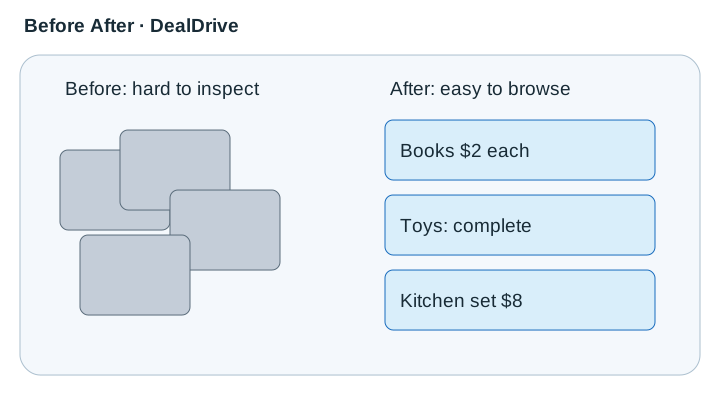
Before and after: make inspection easier
 View diagram at full size (opens an enlarged view) ↗
Improve visibility without concealing defects.
Build the display from stable supports
Inspect the table before adding merchandise. Check that folding legs are locked, fasteners are secure and the surface is level on the actual ground. Respect the manufacturer's load limit and avoid improvised supports that can shift when a shopper leans against the edge. A cloth can tidy a display, but should not conceal damage, trail into a walkway or hide unstable legs. Keep heavy items low and supported, and choose a separate safe location for anything too heavy for the table. Walk around the display from a shopper's viewpoint. Check whether reaching for one object could knock over another and whether a bag or stroller could catch a projecting corner. Recheck stability after moving a table or loading new stock.
Create zones that answer a buyer's questions
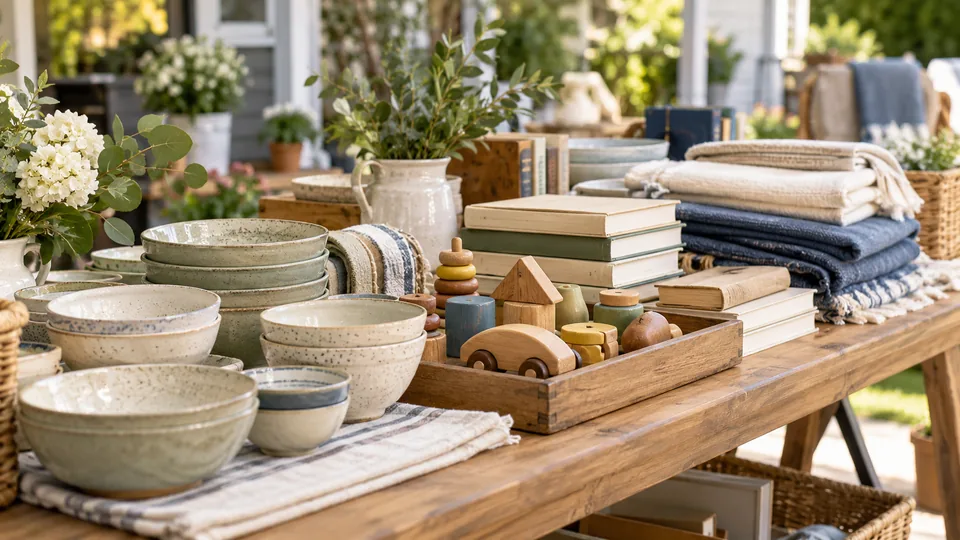
Group goods by the way shoppers make decisions: clothing by size, books by topic, kitchenware by matching set and toys by type or age suitability where reliably identified. Put a clear price near the goods it covers. A sign saying 'paperbacks $2 each or three for $5' is more useful than a large $2 card with no explanation. Illustrative prices should be adjusted to condition and your local market. Separate items with different prices rather than relying on tiny exception notes. Make the useful face of each item visible: book titles toward the aisle, labels facing outward and complete sets arranged together. Leave inspection space so a shopper can set an object down without covering another seller's tag.
Prepare a safe clothing and fragile-goods arrangement
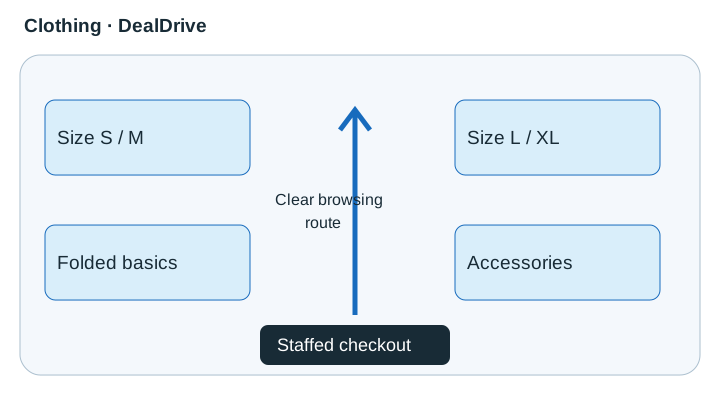
Use a stable clothing rack suited to the weight you will hang. Leave enough room between hangers to see sizes and remove an item without moving the entire rack. Group folded basics in shallow stacks with readable size signs. Secure mirrors and avoid dressing arrangements that require access to private rooms. For glass and ceramics, use a stable surface away from the aisle edge and children’s activity areas. Keep matching lids beside their containers and disclose chips before a buyer discovers them. Wrapping materials should be at checkout rather than piled among fragile items. Avoid creating decorative towers; an arrangement that photographs well but falls when one piece is removed is not a functional sale display.
Reset the table during the sale
Assign short display checks to a helper, or use quiet moments to tidy one zone at a time. Remove empty cartons, fold displaced clothing, return detached labels and wipe spills promptly. As stock decreases, combine compatible categories while keeping the price rules obvious. Keep replacement stock outside the public route and carry only manageable amounts. If a tag disappears, ask the owner or consult the inventory record rather than inventing a price. At the end, sort unsold goods into their planned destinations before dismantling the table. Photograph the final display if you want to learn which arrangements worked, but do not include identifiable shoppers without permission. Record the practical lesson: which groups stayed easy to browse and which repeatedly became cluttered.
A real-world example
Before: a clothing pile hides sizes and prices. After: shallow folded groups have size labels, a few items hang on a stable rack and one sign states the price per item.
Common mistakes
- Covering an unstable table with a cloth.
- Stacking fragile goods where removing one destabilizes others.
- Leaving price exceptions mixed into a uniform-price tray.
Practical checklist
Frequently asked questions
Do I need tablecloths?
They are optional. Keep them secured and clear of feet; they should improve visibility without concealing structural problems.
Where do bags belong?
Keep wrapping supplies near staffed checkout rather than across browsing tables or walkways.
Should heavy goods go on a folding table?
Only if the table is stable, in good condition and rated for the load. Place bulky goods safely on an appropriate surface instead of assuming a household folding table can support them.
Can I put different prices under one large sign?
Make the rule unmistakable. Keep individually priced exceptions separate or clearly tag every item. A table-wide price should apply to all merchandise within its stated group.
A clothing display shoppers can browse
 View diagram at full size (opens an enlarged view) ↗