Deal
Step-by-step instructions
Choose an honest scope
Count prepared goods and organize a few categories. Thirty useful items do not need to be advertised as a huge sale. For very few items, consider a shared event or individual listings.
Reserve circulation first
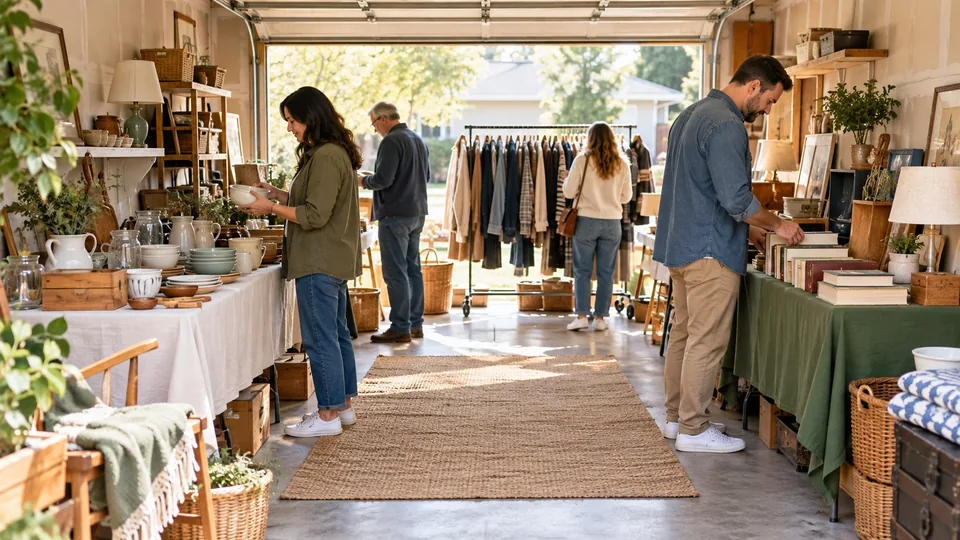
Identify entrances, checkout and a route people can use when another shopper stops. Keep private doors and emergency access clear. Use the layout diagrams as concepts, not scaled plans.
Use readable displays
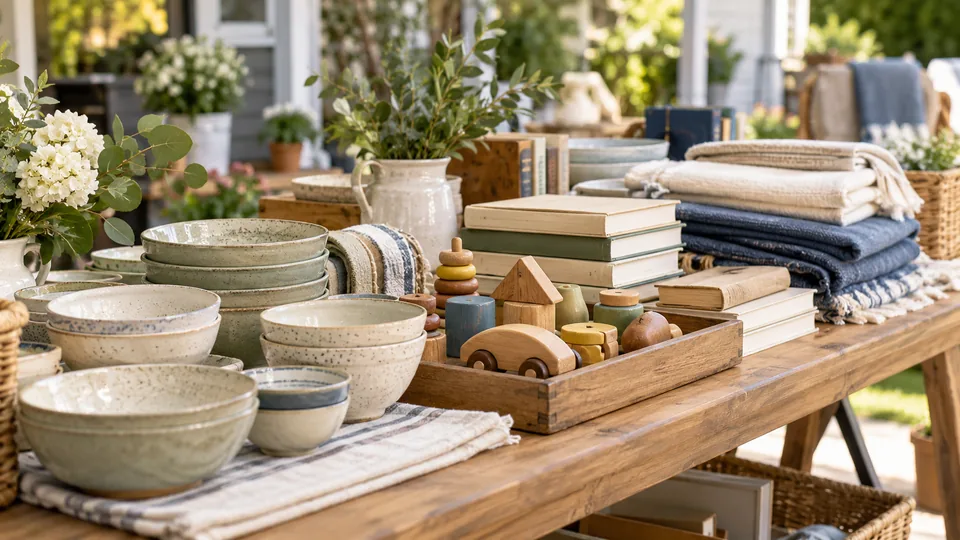
Place goods in shallow trays on stable tables. Group clothing by size and kitchenware by set. Replenish from separate stock rather than stacking everything where shoppers cannot inspect it.
Keep costs proportionate
Borrow suitable tables where possible and confirm their condition and return date. Budget before buying equipment. Photograph the actual selection and explain the main categories accurately.
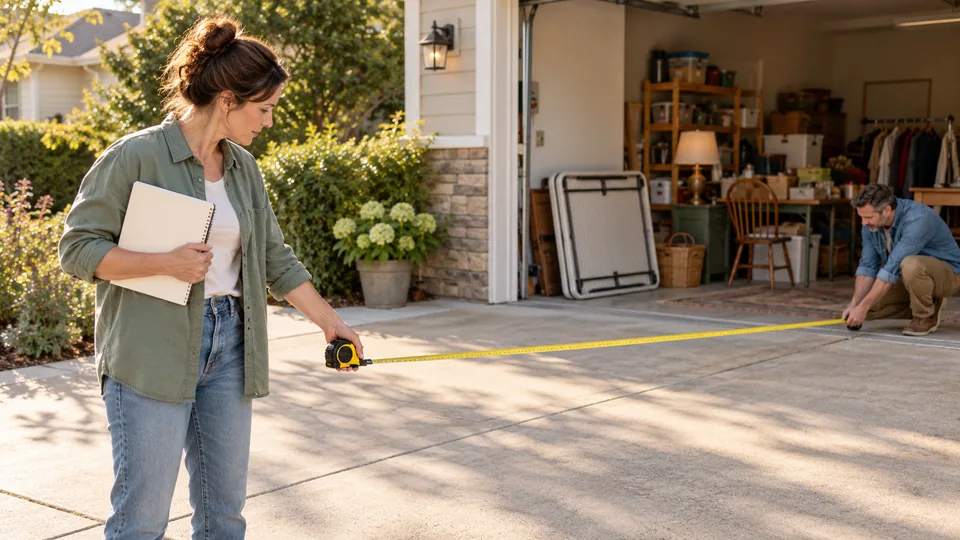
Start with a measured footprint
Sketch the usable area with doors, steps, slopes and private entrances marked before drawing tables. Reserve a clear route from the entrance to checkout and back out. Then measure the tables and racks you actually have, including the space needed to open drawers or inspect an item. A table that fits geometrically can still create a bottleneck when a shopper stops beside it. Keep extra stock somewhere that does not block the route. If the property cannot accommodate a public sale safely, a shared sale at a suitable venue or individual item listings may be more practical. The example layouts are planning concepts rather than building or accessibility specifications; check applicable requirements and adapt them to your site.
Edit the selection for clarity
Choose a small number of understandable categories and make each one easy to inspect. A shallow tray of clearly priced toys is more inviting than a tall carton containing toys, cables and glassware together. Place exceptions to a group price outside the group. Display one complete example of a matching set and label exactly what the buyer receives; keep the rest safely available for inspection. Do not use a sign saying 'everything $1' if a valuable item on the same table is excluded. Put individually priced furniture or electronics beside their own labels. Photograph the actual selection before advertising. Describing a sale as small and well organized gives shoppers useful expectations and avoids wasting the time of visitors seeking a large event.
Use one checkout and one replenishment routine
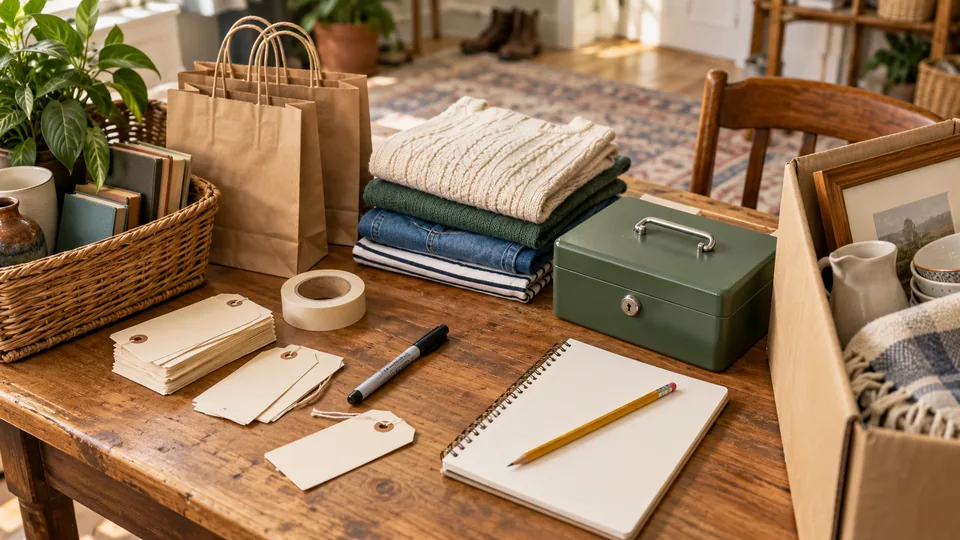
Even a small sale benefits from a clear place to pay. Put the cashier where they can see the display without blocking access or exposing private rooms. Keep the opening change float in a controlled location and spare cash out of view. Put bags, wrapping and a record of agreed minimum prices within reach of the helper who needs them. When items sell, close gaps and bring out replacement goods in manageable batches. Do not create a second pile at the entrance while rearranging the first. If you are working alone, postpone a furniture-loading request until you can secure checkout or obtain help. A shopper's urgency is not a reason to leave cash or other visitors unattended.
Decide what the event needs to earn
List unavoidable costs and compare them with a conservative estimate of sold items. Suppose you have forty items, expect twenty to sell at an illustrative average of $4, and spend $20 on supplies: the estimated net is $60. That may be worthwhile if it also clears a cupboard, but renting expensive tables would change the calculation. Borrow safe equipment when available and avoid buying stock merely to make the sale look larger. Agree on a destination for leftovers before opening, and reserve time to remove signs and close the listing. Review whether the event met your real aim: money, space, convenience or meeting neighbors. Your next event can be smaller, shared or replaced by individual listings if that better suits the results.
A real-world example
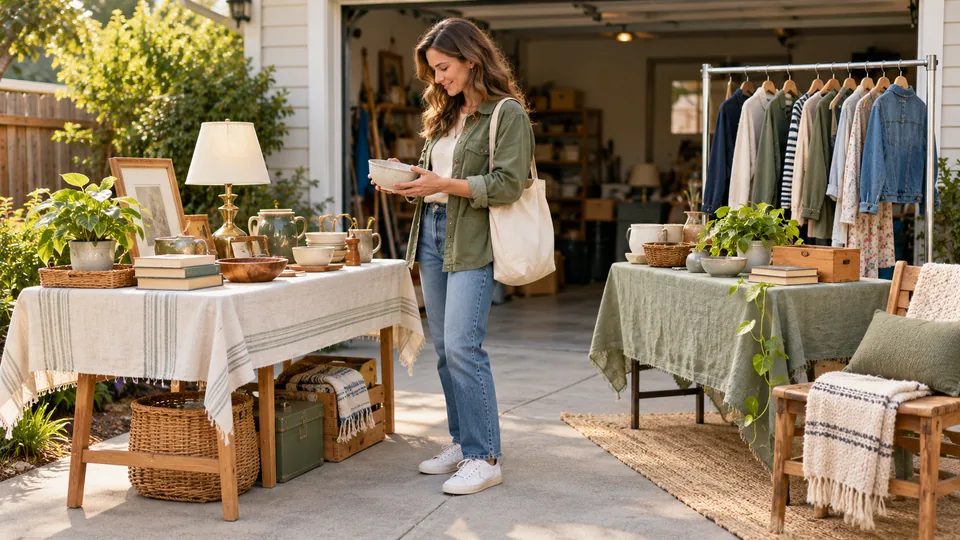
Two borrowed tables hold books and kitchenware on one side, toys and clothing on the other. A desk stands separately with dimensions and pickup requirements.
Common mistakes
- Filling walking space with extra stock.
- Spending more on equipment than a conservative estimate supports.
- Calling a small selection a huge sale.
Practical checklist
Frequently asked questions
How many items do I need?
There is no fixed minimum. Consider whether the selection justifies setup and a shopper's trip; a shared sale can make a small selection more useful.
Can I display on the ground?
Some bulky goods may sit low, but maintain usable paths and do not require shoppers to climb over goods or move obstacles.
How do I avoid overcrowding a small display?
Reserve circulation first, then use shallow category trays and keep replacement stock out of public paths. Reduce the selection on display rather than placing cartons where shoppers must step around them.
Is it worth renting tables for a small sale?
Compare the full rental cost with a conservative revenue estimate. Borrowing suitable, stable equipment or joining another sale may better fit a small selection; do not spend based on optimistic sales alone.